Choosing among the 2026 top Automatic Can Seamers requires more than comparing speed or promotional prices. A reliable machine must match your can diameter, product type, production volume, and packaging material. A small beverage line may need steady output and gentle handling. A food processor may prioritize seam consistency, cleanability, and quick format changes. The right choice begins with real operating conditions, not a sales brochure.
Look closely at the double seam. It protects the product from leaks, oxygen entry, and contamination. Ask suppliers for seam inspection data, adjustment procedures, and service records. A seam micrometer, teardown checks, and regular visual inspections can reveal problems early. Stainless steel contact areas, accessible guarding, and clear cleaning instructions also matter in daily production. Experienced operators often notice details that specifications miss, such as awkward lubrication points or difficult can-height adjustments.
Do not chase maximum speed alone. Too much speed can increase rejects, vibration, and maintenance pressure. A practical comparison should include motor efficiency, changeover time, spare-part access, safety features, and technical support. Check whether the manufacturer explains performance under your actual can sizes and materials. Independent testing is valuable, but results may change on your line. That limitation deserves attention.
A perfect machine does not exist.
This guide examines leading 2026 models through a balanced, evidence-based lens. It considers performance, reliability, operating costs, and long-term usability. Some conclusions may remain uncertain without a factory trial. That is why buyers should request samples, inspect finished seams, and speak with current users before making a final decision.
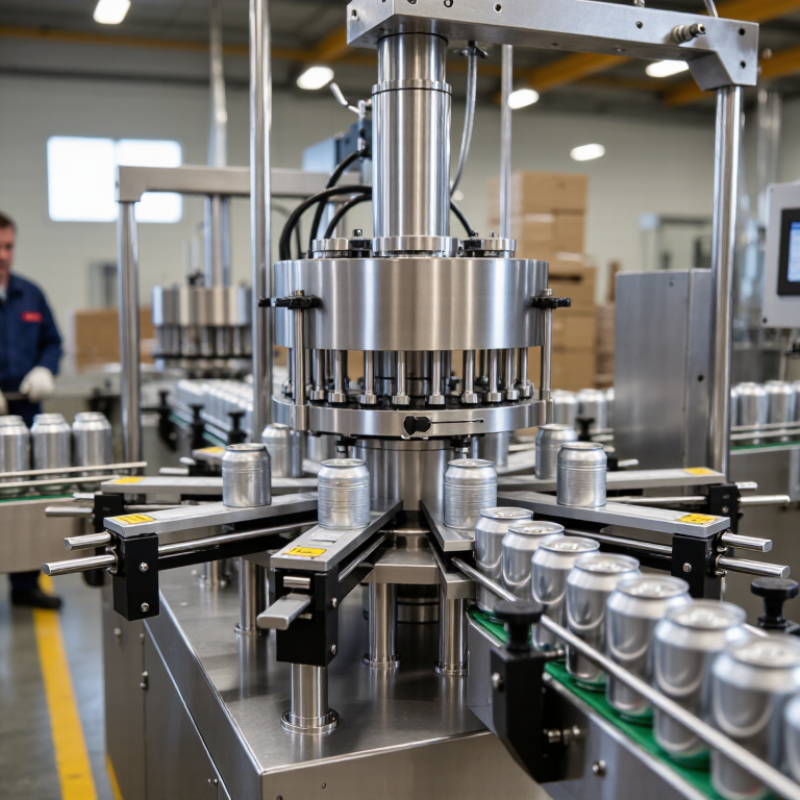
An automatic can seamer joins a metal lid to a filled can with controlled mechanical pressure. The machine positions each can beneath a rotating chuck. A chuck supports the lid, while forming rolls shape the lid and can flange together. Most seamers use two operations. The first roll creates the initial fold. The second roll compresses and tightens the seam. Sensors can monitor can position, lid presence, speed, and pressure. This process supports consistent sealing across long production runs.
When choosing equipment, examine seam measurements, output speed, can dimensions, changeover time, and cleaning access. Ask for documented test results using your actual containers. A reliable supplier should explain adjustment procedures, maintenance intervals, and operator training. Food-contact areas should use suitable materials and designs that limit residue buildup. Do not judge a machine by speed alone. A fast seamer with unstable pressure may create weak seams, wasted materials, or frequent stoppages. That mistake is expensive.
Tips: Check seam thickness and overlap with calibrated tools during trials. Inspect several cans, not only one perfect sample. Listen for unusual vibration. It may reveal alignment trouble before defects become obvious. Leave room for honest review: production conditions vary, and laboratory results may not match a busy factory floor.
2026 Top Automatic Can Seamers: How to Choose the Best?
When comparing automatic can seamers in 2026, begin with seam quality, not advertised speed. A reliable machine should maintain consistent seam thickness, overlap, and pressure during long production runs. Ask for seam samples from your actual can materials. Laboratory results may not match factory conditions.
Speed is not everything. Check the machine’s maximum output, but also observe its stability during size changes. Quick changeover systems reduce downtime when switching can diameters or heights. Servo-driven controls can improve positioning accuracy and reduce mechanical wear. However, complex controls require trained operators and dependable technical support.
Inspect the sensors carefully. They should detect missing cans, lid misalignment, jams, and abnormal pressure before damage spreads. A clear touchscreen should display alarms, production counts, and maintenance reminders. Stainless steel contact areas, smooth surfaces, and easy access improve cleaning and hygiene. Ask how often rollers, bearings, and sealing components need inspection.
Energy use also matters. Compare motor efficiency, compressed-air requirements, and standby consumption. Safety guards should stop operation when opened, while still allowing practical maintenance access. In my experience, the cheapest machine can become expensive when adjustments are frequent. I once focused too heavily on output and underestimated changeover time. That was a poor comparison. Request a live trial, measure finished seams, record setup minutes, and review spare-part availability before making a decision.
| Comparison Dimension | Compact Automatic Seamer | Standard Production Seamer | High-Speed Industrial Seamer | What to Check Before Buying |
|---|---|---|---|---|
| Typical Output | 30–60 cans/min | 60–150 cans/min | 150–400 cans/min | Select capacity based on sustained output, not the machine’s short-term maximum rating. |
| Suitable Operation | Small-batch production, pilot lines, and frequent product changes | Regular food, beverage, and general metal-packaging production | Continuous, high-volume production with automated upstream and downstream equipment | Match the seamer to the actual daily production schedule and required operating hours. |
| Can Diameter Range | Approximately 52–153 mm | Approximately 52–153 mm | Approximately 52–153 mm, depending on tooling and machine configuration | Confirm the exact body diameter, lid diameter, flange profile, and tooling availability for every can format. |
| Can Height Range | Approximately 30–200 mm | Approximately 30–250 mm | Approximately 30–300 mm | Can-height ranges vary by chuck, lifter, guide rail, and container material. |
| Seaming Stations | Usually 1–2 stations | Usually 2 stations | Usually 4 or more stations | More stations generally support higher throughput, but they also increase tooling and maintenance requirements. |
| Seam Formation | Two-operation double seam: first operation followed by second operation | Two-operation double seam with adjustable seaming pressure and timing | Multi-station double seam with synchronized high-speed can handling | Verify that the machine can meet the required seam thickness, seam width, tightness, and countersink specifications. |
| Typical Drive System | Approximately 0.75–2.2 kW motor | Approximately 1.5–4 kW motor | Approximately 4–11 kW motor | Motor size depends on speed, can material, seaming load, and auxiliary systems. |
| Control System | Start/stop controls with basic speed adjustment | PLC and touchscreen interface with recipe settings | PLC, HMI, servo or variable-frequency drive control, alarms, and line communication | Prioritize recipe storage, fault history, emergency-stop functions, and easy access to operating parameters. |
| Changeover Time | Approximately 20–60 minutes | Approximately 15–45 minutes | Approximately 30–90 minutes, depending on the number of formats | Quick-change tooling, format guides, and repeatable adjustment scales can reduce setup waste. |
| Vacuum or Gas Flushing | Optional; commonly added as a separate module | Optional integrated or inline vacuum/gas-flushing system | Usually available for oxygen-sensitive or shelf-life-focused products | Check the required residual oxygen level, gas compatibility, sealing method, and product characteristics. |
| Construction Materials | Painted steel frame with stainless-steel product-contact areas | Stainless-steel guarding and corrosion-resistant product-contact components | Hygienic stainless-steel construction with washdown-compatible guarding options | For wet or corrosive environments, confirm the stainless-steel grade, sealing protection, and washdown rating. |
| Can Feeding | Manual loading or simple infeed conveyor | Automatic conveyor infeed with can spacing and accumulation | Continuous automatic infeed synchronized with the complete packaging line | Check container orientation, feeding stability, accumulation capacity, and compatibility with existing conveyors. |
| Can Discharge | Manual collection or short discharge conveyor | Automatic discharge conveyor with basic jam detection | High-speed discharge with reject handling and line synchronization | Reliable discharge prevents seam damage, can tipping, and downstream line stoppages. |
| Seam Quality Monitoring | Manual inspection and periodic destructive testing | Sensor-based checks plus scheduled seam teardown inspection | Automated monitoring options with alarm, reject, and production-data functions | Even with sensors, regular teardown inspection remains necessary for seam-quality verification. |
| Typical Utility Requirements | Single-phase or three-phase power; compressed air may be optional | Three-phase power and approximately 5–7 bar compressed air when pneumatic devices are used | Three-phase power, compressed air, and optional gas or vacuum utilities | Confirm voltage, frequency, air consumption, gas demand, floor space, drainage, and ventilation requirements. |
| Best Choice For | Low-to-medium volumes and flexible production | Most general-purpose production lines | High-volume lines where throughput and automation justify higher investment | Choose the smallest machine that comfortably meets your required output and future growth plan. |
| Main Trade-Off | Lower investment but more manual handling and lower throughput | Balanced cost, flexibility, speed, and automation | Highest productivity but greater capital cost, tooling complexity, and maintenance demand | Compare total cost of ownership, including tooling, energy, labor, spare parts, training, and downtime. |
| Technical figures are representative ranges commonly used for automatic double-seam canning equipment. Actual performance depends on can diameter and height, material, lid design, product viscosity, seam specifications, tooling, line layout, and operating conditions. Final selection should be based on validated production trials and seam-quality testing. | ||||
Choosing an automatic can seamer begins with the container, not the machine catalogue. Measure the can diameter, height, metal thickness, and lid profile. A seamer suited to tall cans may struggle with shallow containers. Small differences matter.
Match the machine’s speed to your real production demand. A line rated at 300 cans per minute may perform poorly with frequent stops, changeovers, or irregular feeding. Check the required seam dimensions, including overlap, tightness, and countersink depth. Ask for production samples using your actual cans and lids. This practical test often reveals problems that specifications hide. Product temperature and filling level also influence seam consistency, especially when liquid reaches the lid area.
Consider maintenance access, tooling changes, cleaning, and operator training. Stainless contact surfaces can simplify hygiene routines, but they do not remove the need for disciplined inspection. Plan regular checks with seam measurements, visual examination, and destructive testing where appropriate. Keep spare wear parts available. Downtime is expensive.
A reliable supplier should explain adjustment limits, qualification procedures, and service response times. Documentation should be clear enough for a new operator to follow. I have seen teams focus heavily on output and overlook changeover time. That choice later reduced efficiency. The best match is not always the fastest seamer. It is the one that protects seam quality, fits the line layout, and remains practical during daily production.
Choosing an automatic can seamer in 2026 starts with seam quality, not advertised output. A reliable machine should produce consistent seam height, tightness, and overlap throughout a production shift. Ask for sample cans, then inspect them with a seam micrometer and visual teardown. Look for smooth hooks, even compression, and no sharp metal edges. Small variations matter. Excessive speed can hide poor adjustment. In my production trials, the best results came from machines offering precise control of chuck pressure, roll timing, and can handling. Operators should record measurements at startup and after changeovers. That record provides useful evidence, not just a sales promise.
Speed matters when the infeed remains stable. A fast seamer is not efficient if cans tip, jam, or need frequent resets. Choose guarded access points, interlocked doors, clear emergency stops, and simple fault messages. Safety should be visible. Maintenance also affects real output. Tool-free access, corrosion-resistant contact areas, and commonly available wear parts can reduce downtime. Check lubrication points, cleaning spaces, and the time needed to replace rolls. I would not trust a machine after one successful demonstration. Test different can sizes, repeat seam inspections, and observe performance during longer runs. My own evaluations sometimes miss operator fatigue, which deserves more attention. A quiet, clean, adjustable machine may outperform a faster one over the entire year.
Choosing the best automatic can seamer starts with your production needs, not machine appearance. Estimate your daily output, can sizes, product viscosity, and available floor space. A seamer should match your filling line without creating delays. Check its sealing speed under real operating conditions, not only the advertised maximum.
Reliable seam quality protects product safety and reduces costly waste. During evaluation, inspect the chuck, seaming rollers, sensors, and changeover system. Stainless steel construction helps in wet production rooms. Easy access also makes cleaning and routine inspection more practical. Ask for seam samples from your actual cans. Small differences in metal thickness can affect results. I have seen efficient machines perform poorly after rushed setup. That mistake is easy to repeat.
Tips: Confirm electrical requirements before ordering. Measure changeover time with your operators. Request maintenance instructions and spare-part availability. Watch a complete production trial, including startup and shutdown. Do not ignore noise, vibration, or awkward controls. These details often reveal future problems. A short warranty sounds useful, but response time matters more. Document seam measurements during testing, then review them after extended operation. Your first choice may still need adjustment.
