Choosing an EV e-axle supplier in China requires more than comparing unit prices. The right partner must prove performance under real vehicle conditions. Ask for torque curves, efficiency maps, thermal test results, and durability records. A clean factory tour also matters. Look closely at motor winding lines, gear inspection equipment, end-of-line testing, and serial-number traceability.
Professor Ouyang Minggao, a respected Chinese electric-vehicle expert, has stated, “The three core technologies of new energy vehicles are batteries, motors, and electronic controls.” His point also applies to e-axle selection. An e-axle combines these systems with gears, software, cooling, and mechanical housing. One weak part can reduce the whole vehicle’s reliability.
A capable EV e-axle supplier China should explain its design choices in measurable terms. Can it meet your voltage, torque, speed, noise, vibration, and waterproofing requirements? Can its engineering team support calibration during prototype testing? Can it supply consistent batches after mass production begins? These questions expose the difference between an experienced manufacturer and a trading company.
Price still matters. It should not lead the decision. Review warranty terms, spare-parts planning, software ownership, production capacity, and communication speed. Request references from comparable vehicles, not only laboratory samples. A supplier may present impressive efficiency figures, yet ignore cold starts or steep-road loading. That is a warning.
No shortlist is perfect. Your evaluation may miss something. Independent validation remains worthwhile. In practice, the best partner combines transparent data, responsive engineering, stable manufacturing, and the humility to correct problems quickly.
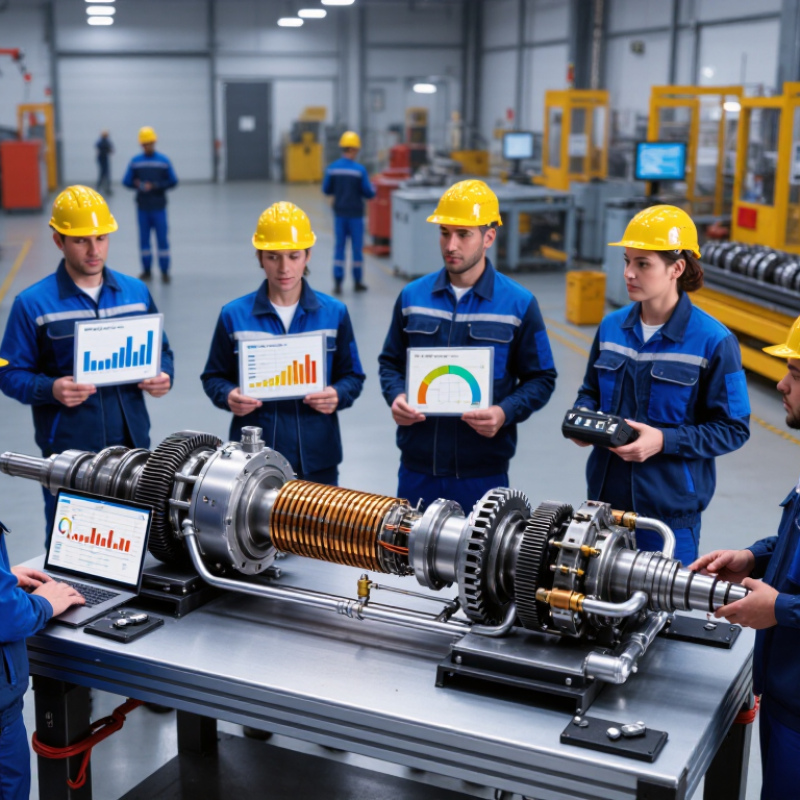
Before contacting a Chinese EV e-axle supplier, define the vehicle in measurable terms. Record curb mass, gross mass, payload, tire radius, top speed, gradeability, acceleration target, and expected range. State whether the axle serves a passenger car, delivery van, shuttle, or off-road platform. Each application changes torque, cooling, noise, and durability priorities. A neat spreadsheet helps. It can still hide assumptions.
Describe the operating environment with evidence, not broad labels. Include ambient temperatures, road gradients, water exposure, dust, altitude, daily mileage, stop-start frequency, and parking duration. Specify the battery voltage window and available peak power. Then define continuous and peak wheel torque, gear ratio, differential type, mounting limits, brake integration, communication protocol, and functional safety expectations. Add a duty cycle with minutes, speeds, loads, and rest periods. This gives engineers something testable.
Ask suppliers to map their proposed e-axle against these requirements. Request efficiency curves, thermal limits, ingress protection evidence, endurance results, acoustic data, and sample inspection records. Clarify prototype quantities, tooling ownership, software responsibilities, and change-control procedures. During reviews, challenge optimistic figures. A short test may miss heat soak. I would also leave room for revision; early requirements are rarely perfect, and forcing false precision can create a costly mismatch.
When evaluating an EV e-axle supplier in China, inspect engineering depth before discussing price. Ask for motor maps, reduction ratios, peak torque, continuous power, and thermal limits. A capable team should explain these figures clearly, not hide behind general claims. Request sample test reports with temperature, load, speed, and efficiency data. Real measurements matter.
Product compatibility needs equal attention. Compare your vehicle’s battery voltage, inverter communication, axle load, wheel size, and installation space with the supplier’s design. Check mounting points, half-shaft angles, cooling connections, and ground clearance using actual drawings. Confirm whether the e-axle supports your control protocol and required fault responses. Small interface errors can delay a vehicle program for months.
Look beyond the prototype. Ask how engineers manage design changes, software calibration, endurance testing, and production consistency. Factory audits should include machining equipment, assembly controls, traceability records, and end-of-line testing. I once gave too much weight to an impressive sample unit; later, process evidence became more important. A supplier may have strong engineers but weak documentation. That gap deserves direct questions. Ask for corrective-action records and a realistic validation schedule. Visit the test area if possible. Listen to technicians, too. Their practical comments often reveal cooling, noise, or sealing problems earlier than formal presentations.
When choosing an E axle supplier in China, verify the factory behind the sales presentation. Visit the production line if possible. Check machining accuracy, clean assembly areas, and torque-controlled fastening tools. Ask how each axle receives a serial number. That number should connect components, operators, inspection results, and shipment records. A polished factory tour can still hide weak traceability.
Review testing standards before discussing price. Reliable suppliers should provide documented tests for torque, efficiency, noise, vibration, thermal performance, sealing, and endurance. Request raw test data, not only selected charts. Confirm whether testing is performed in-house or by an independent laboratory. Check calibration dates for dynamometers, temperature sensors, and insulation testers. Certifications such as ISO 9001 or IATF 16949 can support quality control, but certificates alone prove little. For safety-related systems, ask how ISO 26262 processes are applied. Market-specific requirements may also include UNECE or other applicable regulations.
Tips: Ask for a sample control plan, failure-analysis report, and corrective-action record. Compare laboratory conditions with your vehicle’s real duty cycle. Inspect one finished unit yourself. It may reveal more than a long presentation. Do not accept unclear claims like “fully tested.” Request limits, methods, pass criteria, and responsible signatures. My own review would include a second audit, because the first visit can miss rushed work or incomplete records. Reliability grows through evidence, not confident promises.
Cost should mean more than the unit quotation. Ask for tooling fees, testing charges, packaging costs, and export documentation. A low price can hide expensive engineering changes. Compare the complete landed cost for your target production volume. Request a clear quotation with motor power, reduction ratio, warranty, and payment terms. Small details matter.
Supply capacity needs practical evidence. Review monthly output, production equipment, inspection procedures, and critical component sources. Ask whether the supplier can support pilot orders and full-scale production.
Factory visits or live video audits can reveal bottlenecks that brochures rarely show. Check sample records, endurance results, and failure-response procedures. Numbers need context. A claimed capacity may not match your required delivery schedule.
Customization should be defined in writing. Discuss software interfaces, mounting points, cooling systems, gear ratios, and vehicle integration support. Confirm who owns engineering files and how design changes are approved. Delivery terms should state lead time, shipping method, inspection points, and responsibility for delays. Clarify spare-part availability and technical support after shipment. Incoterms must be understood by both sides. I would also test communication during the quotation stage. Slow replies often become slower problem-solving later. No supplier is perfect. A careful evaluation should leave room for technical questions, revised assumptions, and a second review before signing.
How to Choose an EV E-Axle Supplier in China?
After-sales support often reveals more than a factory presentation. Ask how quickly engineers respond to a failed vehicle in winter. Request a written escalation process, warranty scope, and spare-parts availability. A dependable supplier should provide diagnostic software, fault-code guidance, and trained service contacts. Test this process before signing. Send a technical question and measure the response time.
Reliability requires evidence, not attractive samples. Review endurance-test records, thermal-cycle results, vibration data, and traceability procedures. Visit the production line if possible. Check whether torque sensors, insulation testers, and final inspection records are actually used. A pilot batch can expose noise, connector looseness, or software problems that documents miss. Small details matter. However, test reports may not represent every driving condition. Independent verification remains worthwhile.
Long-term cooperation depends on honest communication. Discuss engineering changes, production capacity, quality claims, and forecast fluctuations in writing. Confirm who pays for field analysis and how replacement units are handled. A supplier that shares problems early is usually safer than one promising perfection. We once valued a low price too heavily; later support consumed the savings. That mistake deserves attention. Review performance quarterly, including response times, defect rates, delivery accuracy, and improvement actions. A practical partnership needs transparent data, patient engineering discussions, and room to correct weak decisions.
| No. | Evaluation Dimension | Recommended Benchmark | Evidence to Request | Weight | Scoring Guidance |
|---|---|---|---|---|---|
| 1 | Automotive Quality Management | A documented automotive quality system, preferably certified to IATF 16949; ISO 9001 alone may indicate a general quality system but does not replace automotive-specific controls. | Valid certificate, certificate scope, audit records, corrective-action records, process-control plans, and production-part approval documents. | 12% | 5 = valid IATF 16949 with relevant scope; 3 = ISO 9001 with automotive procedures; 1 = no independently verifiable system. |
| 2 | Functional Safety and Product Compliance | Product-development processes should address ISO 26262 principles where safety-related functions apply. The system should also be assessed against applicable vehicle regulations, such as UN R100 and UN R10, according to the target market and vehicle architecture. | Applicable certificates or test reports, safety concept, hazard analysis, traceability matrix, EMC reports, and market-specific compliance declarations. | 12% | 5 = complete, applicable, third-party-supported evidence; 3 = partial evidence; 1 = compliance claims without documentation. |
| 3 | E-Axle Reliability and Validation | Validation should cover motor, inverter, reducer, seals, bearings, thermal performance, vibration, corrosion, water ingress, overload, and endurance. Test conditions should match the intended vehicle duty cycle. | Design Verification Plan and Report, endurance-test results, temperature and vibration profiles, failure analysis, accelerated-life assumptions, and sample-size rationale. | 15% | 5 = complete validation linked to vehicle use; 3 = component-level tests only; 1 = demonstration testing without a documented plan. |
| 4 | Ingress Protection and Environmental Durability | The proposed enclosure rating should be appropriate for its installation location and verified under IEC 60529 testing. For exposed underbody locations, an IP rating such as IP67 or higher may be requested, subject to the vehicle design and test conditions. | IP test report, water and dust test conditions, pressure-equalization design, corrosion testing, breather specifications, and sealing inspection records. | 8% | 5 = rating and test conditions match the application; 3 = rating documented but application fit is unclear; 1 = marketing claim only. |
| 5 | After-Sales Response Capability | A written support process should define an initial response target, escalation path, remote diagnostic capability, and field-service responsibilities. A practical procurement target is an initial response within one business day. | Service-level agreement, support organization chart, escalation matrix, ticket examples with personal data removed, diagnostic software description, and service coverage by region. | 12% | 5 = contractual response and escalation commitments; 3 = support available but informal; 1 = no defined after-sales process. |
| 6 | Warranty and Failure-Resolution Policy | The warranty should clearly define duration, mileage or operating-hour limits, covered parts, exclusions, claim evidence, replacement responsibilities, and root-cause analysis. A 24-month warranty is a reasonable commercial benchmark to request, subject to the application. | Warranty terms, claim workflow, return-material authorization process, failure-analysis template, replacement lead time, and examples of corrective-action reports. | 10% | 5 = clear warranty with measurable handling times; 3 = standard warranty with limited service detail; 1 = vague or conditional coverage. |
| 7 | Spare Parts and Serviceability | Critical replacement parts should have defined availability, storage conditions, revision control, and compatibility records. The supplier should identify which components are repairable and which require complete assembly replacement. | Recommended-spares list, parts-obsolescence policy, service manuals, diagnostic procedures, component interchangeability matrix, and spare-parts lead-time commitments. | 8% | 5 = structured parts and repair program; 3 = parts supplied on request; 1 = assembly-only replacement with no service documentation. |
| 8 | Production Capacity and Process Control | Capacity should be supported by equipment, trained personnel, incoming inspection, end-of-line testing, traceability, and a documented change-management process. Capacity claims should be verified against the required annual volume and ramp schedule. | Factory-audit report, production-flow chart, bottleneck analysis, end-of-line test records, serial-number traceability, capacity plan, and business-continuity plan. | 8% | 5 = verified capacity with robust controls; 3 = capacity appears adequate but audit evidence is incomplete; 1 = capacity is based only on an unverified statement. |
| 9 | Engineering Integration and Software Support | The supplier should support CAN communication, calibration, fault-code interpretation, mechanical interfaces, thermal integration, cybersecurity responsibilities, and controlled software or parameter updates. | Interface control document, CAN database or signal list, diagnostic protocol, software-revision policy, calibration process, cybersecurity responsibility matrix, and engineering-change records. | 7% | 5 = documented integration and change control; 3 = basic technical support; 1 = undocumented interfaces or uncontrolled updates. |
| 10 | Long-Term Cooperation and Commercial Stability | A suitable supplier should provide transparent change notification, tooling ownership terms, lifecycle support, forecast flexibility, intellectual-property protection, supply-risk monitoring, and a documented product-obsolescence plan. | Master supply agreement, change-notification period, tooling and IP clauses, lifecycle-management policy, dual-source strategy for critical components, and financial or operational risk information. | 8% | 5 = strong contractual and lifecycle governance; 3 = acceptable cooperation framework; 1 = high dependency or unclear long-term commitments. |
| Total Evaluation Weight | 100% | Use a 1–5 score for each dimension and multiply by the assigned weight. | |||
