Choosing a Film Coating Machine is not just a matter of selecting the largest model or the newest control panel. The right choice depends on the product, batch size, coating formulation, and production goals. A machine that performs well for one tablet shape may deliver uneven coverage on another. Small details matter.
Start by comparing working capacity with your typical batch, not only the equipment’s maximum rating. Consider the pan or drum design, spray-gun arrangement, airflow, drying capacity, and access for cleaning. During a plant visit, look closely at how operators load tablets, adjust spray settings, and inspect the finished coating. Ask for trial data using a product or formulation similar to yours. A smooth demonstration is useful, but it cannot replace evidence from repeatable production runs.
Controls and service support also deserve attention. Clear records of temperature, airflow, and spray parameters can help teams reproduce a process and investigate variation. Confirm which parts require routine cleaning or replacement, and ask how quickly technical support is available. Capacity is not everything. A technically capable machine may still be a poor fit if its maintenance demands exceed your team’s resources. Specifications alone will not reveal that.
This guide explains the main selection criteria and the trade-offs behind them. It also considers scale-up, operator training, and practical questions to ask suppliers. There may be no perfect machine. A careful comparison, supported by real trial results and candid discussion with experienced users, can make the decision more reliable.
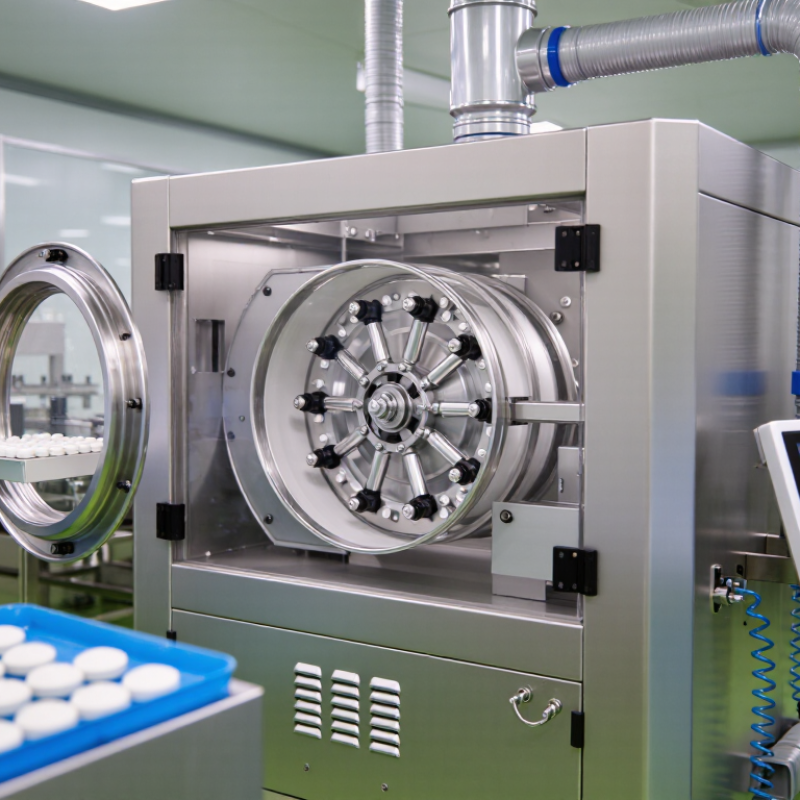
Choosing a film coating machine starts with the tablets themselves. Small details matter. Round tablets, oblong caplets, and fragile cores behave differently as they tumble. Tablet shape affects movement across the pan, while core hardness influences how much handling the product can tolerate. These details help determine suitable pan geometry, spray coverage, and operating speed.
Batch size matters just as much. Compare the smallest routine batch and the largest planned batch with the machine’s rated capacity. A practical starting point is often a pan load between 30% and 70% of rated capacity, subject to the equipment maker’s guidance. Below that range, tablets may not form a stable bed; above it, mixing and spray distribution can become less consistent. Not every formulation follows the same pattern.
Check the load in kilograms, not only by batch count. Tablet weight and size can make two batches with equal tablet numbers occupy very different volumes. Ask how the proposed machine handles your actual cores, target batch, and expected coating gain. A trial can reveal dead zones, edge chipping, or uneven color that specifications alone may not show. Capacity charts are useful, but they are not the whole story. Manufacturers may rate capacity under defined conditions, and real products can behave differently. A little uncertainty here is worth investigating.
For many immediate-release film coats, a target weight gain of 2–5% is a useful starting range, not a universal rule. Calculate it against the dry tablet-core weight. A 300 mg core gaining 3% should add about 9 mg of dry coating. Confirm the target with development data and the coating’s purpose, such as color, handling, or moisture protection.
The machine must distribute that small amount evenly across the batch. A perforated pan can offer controlled airflow and efficient drying, while a conventional pan may suit simpler processes. Either way, match pan capacity to batch size; an underfilled pan can tumble poorly, while an overloaded one may leave tablets unevenly exposed. Check spray rate, atomization, inlet air, and bed temperature together. They interact.
Small changes matter. Too much spray can create picking or sticking before the bed dries. Excessive drying may cause spray to dry before it reaches the tablets. Record tablet weights before and after coating, using representative samples and consistent drying conditions. Then inspect individual tablets for color variation, rough patches, and edge coverage. The percentage alone can mislead. A batch may hit 3% average weight gain and still show uneven coating, so review process records and product requirements before fixing the machine settings.
How to Choose the Right Film Coating Machine?
Size Spray and Drying Systems for the Required Product-Temperature Range
Set the machine around the product’s safe temperature window, not just its batch size. During coating, inlet-air temperature is only one part of the picture. Bed temperature, spray rate, airflow, and exhaust humidity together determine how quickly droplets dry. If drying lags, tablets may stick or develop uneven films. If it runs too aggressively, the surface may dry before the coating spreads properly.
Size the spray and drying systems as a coupled process. Estimate the water or solvent load from the planned spray rate, then check whether the dryer can remove it while holding the product within its specified range. ICH Q1A(R2) uses 40°C and 75% relative humidity for six-month accelerated stability testing of many drug products. These are testing conditions, not coating setpoints; the formulation’s limits still govern. Heat is not uniform. A probe may miss warmer zones or brief temperature spikes, so confirm readings at representative bed locations during trials.
Tips: Start with a small batch and record bed temperature, inlet and outlet conditions, spray rate, and appearance. Change one setting at a time. A tidy calculation can still miss real airflow patterns, so verify the process with the actual product and load.
Size the spray and drying systems around the product’s allowable temperature range.
These illustrative screening ranges show product-bed temperatures, not inlet-air setpoints or universal process specifications. Confirm the acceptable range for the formulation during development. Select spray capacity together with drying airflow and heat-transfer capacity so the coating liquid can be removed without exceeding the product’s temperature limit; the required balance depends on batch load, pan design, coating solids, and solvent system.
Compare Perforated-Pan and Fluid-Bed Designs for Your Batch and Tablet Geometry
A perforated-pan coater suits many conventional tablets, especially rounded shapes that tumble freely. The rotating pan turns the bed while spray nozzles apply coating, and heated air passes through perforations. Check whether tablets move evenly without sticking or chipping. Deep score lines, unusual shapes, and very small batches can make uniform coverage harder to achieve.
Fluid-bed systems suspend particles in moving air and spray them as they circulate. They often suit pellets, granules, and smaller, lighter tablets with consistent size and density. But heavier or flatter tablets may not fluidize reliably; collisions can also damage delicate edges. Geometry matters. A tablet that looks simple on a tray may behave differently in an air stream.
Match the machine to the actual batch, not just the largest batch listed on a specification sheet. Consider load range, tablet dimensions, friability, target coating weight, and the space needed for particles to move. During a trial, inspect color and weight variation across samples, including pieces taken from different parts of the bed. Small details count. There is no perfect shortcut here: a pilot run may reveal that your preferred design needs slower spraying, a different fill level, or more adjustment than expected.
When evaluating a film coating machine, inspect how GMP controls work during a real batch, not just in a brochure. Can operators set role-based permissions for recipes, spray rates, inlet temperature, and pan speed? Are critical changes logged with user identity, timestamp, and reason? Check the audit trail on screen, and ask how alarms, failed entries, and recipe revisions are handled. Small details matter.
Part 11 is not a feature checkbox. It may apply when electronic records or signatures meet applicable FDA record requirements. Scope depends on intended use and predicate rules. Confirm the requirements with your quality and regulatory teams. If electronic signatures are used, verify identity controls, signature meaning, record linking, and access safeguards. Test these functions with representative users before purchase.
Ask for documented testing and validation support, including data backup, restore, time synchronization, and export in readable formats. Can a reviewer trace a coating run from approved recipe to final report without unexplained gaps? GMP systems still need procedures, training, and ongoing oversight. A machine cannot supply those. The awkward part: polished screens can hide weak controls. Request a practical demonstration with a changed parameter and a rejected login. Then review the evidence, not only the supplier’s assurance.
