What is Concrete Floor Grinding Pads and How to Choose Them?
Concrete Floor Grinding Pads are essential tools in the flooring industry. They play a crucial role in achieving smooth and polished concrete surfaces. According to a report by Grand View Research, the global concrete floor grinding market is projected to grow significantly, fueled by the increasing demand for durable flooring solutions. This growth highlights the importance of selecting the right grinding pads.
Choosing the right Concrete Floor Grinding Pads requires understanding their composition and purpose. Different pads serve various applications, from surface preparation to polishing. For instance, diamond pads are renowned for their efficiency in grinding hard surfaces. However, an incorrect selection can lead to inefficiencies and increased costs. This reflects a common challenge in the industry where many overlook the specifics of pad selection.
The effectiveness of Concrete Floor Grinding Pads is often measured by their performance and lifespan. Many professionals report that using high-quality pads can reduce grinding time and improve finish quality. However, it also raises questions about balancing cost with performance. Inadequate research can lead to poor choices, resulting in wasted resources. Thus, understanding the nuances of these tools is vital for long-term success in flooring projects.
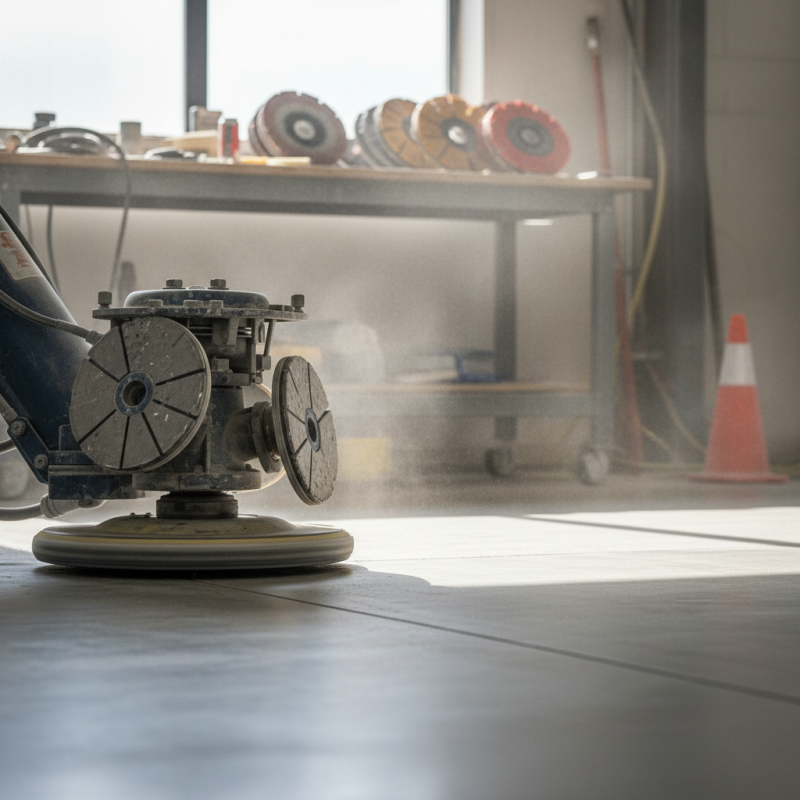
What Are Concrete Floor Grinding Pads and Their Popular Types?
Concrete floor grinding pads are essential tools for achieving a smooth, polished finish on concrete surfaces. These pads come in various types, each designed for specific applications. Popular types include diamond grinding pads, resin pads, and metal bond pads. Diamond pads are favored for their durability and effectiveness on hard surfaces. They can easily remove imperfections and provide a high-gloss finish. According to industry reports, diamond pads have a longer lifespan compared to other materials, making them cost-effective in the long run.
Choosing the right grinding pad depends on the type of project and the desired finish. For instance, resin pads are ideal for polishing finished floors, offering a finer finish than metal bond pads. They work well on softer concrete and can achieve high-gloss levels. A survey by the Concrete Polishing Association indicated that 70% of contractors prefer resin pads for residential projects due to their ease of use and quality results. However, it's important to consider the specific conditions of your project, as the wrong choice can lead to unsatisfactory outcomes.
Awareness of the surface condition is crucial. Some pads may wear out quickly on abrasive surfaces, leading to increased costs. Furthermore, different grit levels can yield varying results; fine grits produce a smoother finish but take longer to apply. Balancing these factors requires experience and knowledge of concrete properties. Observing these aspects can make a significant difference in the outcome of your flooring project.
Key Factors to Consider When Choosing Concrete Floor Grinding Pads
Choosing the right concrete floor grinding pads is crucial for achieving optimal results. There are several key factors to consider when making your selection. Start with the bond type. Softer bonds work well for hard concrete, while harder bonds are better for soft concrete. Understanding your specific flooring material can help guide your choice.
Next, consider the grit size. A finer grit yields a smoother finish, but it takes longer to see results. Coarser grits are faster but deliver a rougher surface. Think about the desired outcome before making a decision. Additionally, the type of grinding machine impacts pad compatibility. Not all pads fit all machines. This can lead to inefficiencies or even damage.
Lastly, don't overlook the pad's lifespan. Some materials offer more durability but cost more upfront. Weigh short-term savings against long-term performance. It's also worth pondering the environmental impact of your choices. Not all pads are created equal. Reflecting on your needs will ultimately lead to better choices.
Understanding Grit Levels and Their Impact on Grinding Performance
Concrete floor grinding pads play a crucial role in achieving the desired finish on concrete surfaces. Understanding grit levels is essential for selecting the right pad. Grit refers to the size of the particles embedded in the pad, influencing both performance and the final result. Finer grits, typically ranging from 100 to 800, are ideal for polishing. They deliver smooth finishes and enhance shine. In contrast, coarser grits, from 30 to 60, are used for heavy grinding. These are effective for removing old coatings and preparing surfaces.
Choosing the appropriate grit level can be tricky. Many users may default to a single grit without considering the project's unique requirements. Testing different grits on small areas can provide insight into their effects. For instance, using too fine a grit on an uneven surface may lead to unsatisfactory results. Conversely, starting with an excessively coarse pad might damage the concrete. It’s essential to reflect on the surface condition and desired outcome. Each grit impacts the time and effort needed for grinding. Understanding this relationship can guide users in making informed decisions.
What is Concrete Floor Grinding Pads and How to Choose Them? - Understanding Grit Levels and Their Impact on Grinding Performance
| Grit Level | Use Case | Performance Impact | Recommended Applications |
| 30-50 Grit | Aggressive grinding, heavy material removal | Fast material removal but rough finish | Initial surface preparation, old coating removal |
| 60-80 Grit | Medium grinding, smoothing of the surface | Balanced removal rate and finishing quality | Polishing preparation, thin coatings |
| 100-200 Grit | Fine grinding, enhancing surface smoothness | Produces a smoother finish with less material removal | Final polishing stages, decorative concrete work |
| 300+ Grit | Ultra-fine polishing, detailed finishing | Minimal material removal, high gloss finish | High-end surface finishes, reflective surfaces |
Comparison of Diamond vs. Resin Grinding Pads for Concrete Floors
When it comes to concrete floor grinding, choosing the right pads is crucial. Diamond and resin grinding pads are the two main options available. Each has its unique features and uses. Diamond pads are known for their durability and effectiveness in grinding tough surfaces. They can handle heavy-duty jobs and offer a longer lifespan compared to resin pads.
On the other hand, resin pads are often preferred for their flexibility and smoother finish. They can achieve a high-gloss surface, making them ideal for residential or commercial settings where aesthetics matter. However, resin pads tend to wear out more quickly than diamond pads. It’s essential to weigh these factors according to the specific project requirements, like the concrete hardness and the desired finish.
Many users overlook the importance of matching the pad to the job type. Not every situation requires the most robust option. Some tasks may benefit from the gentler touch of resin pads. Testing different pads on sample areas can provide insights. This experimentation helps to avoid costly mistakes later on. Ultimately, understanding the characteristics of each pad ensures a more successful grinding process.
Industry Standards for Quality and Longevity of Grinding Pads
Choosing the right grinding pads for concrete floor polishing is essential. Quality and longevity are key aspects to consider. Grinding pads should be durable and designed for the specific material they will be used on. A pad made from high-quality diamonds can significantly enhance performance and lifespan.
Industry standards often emphasize hardness levels and bond types. Harder surfaces require specific pads to ensure effective grinding. Many professionals look for a balance of aggressiveness and smoothness. It's crucial to assess the diamond concentration and grit size as well. These factors directly affect the finish quality and the time taken for grinding.
Familiarity with these standards can help reduce common mistakes. Inappropriate pad selection can lead to dissatisfaction and increased costs. Testing different pad types on less critical areas might be wise. Observing wear patterns can provide insights into the effectiveness of your choice. This approach encourages a thoughtful selection process that aligns with your specific needs and conditions.
